Summary:
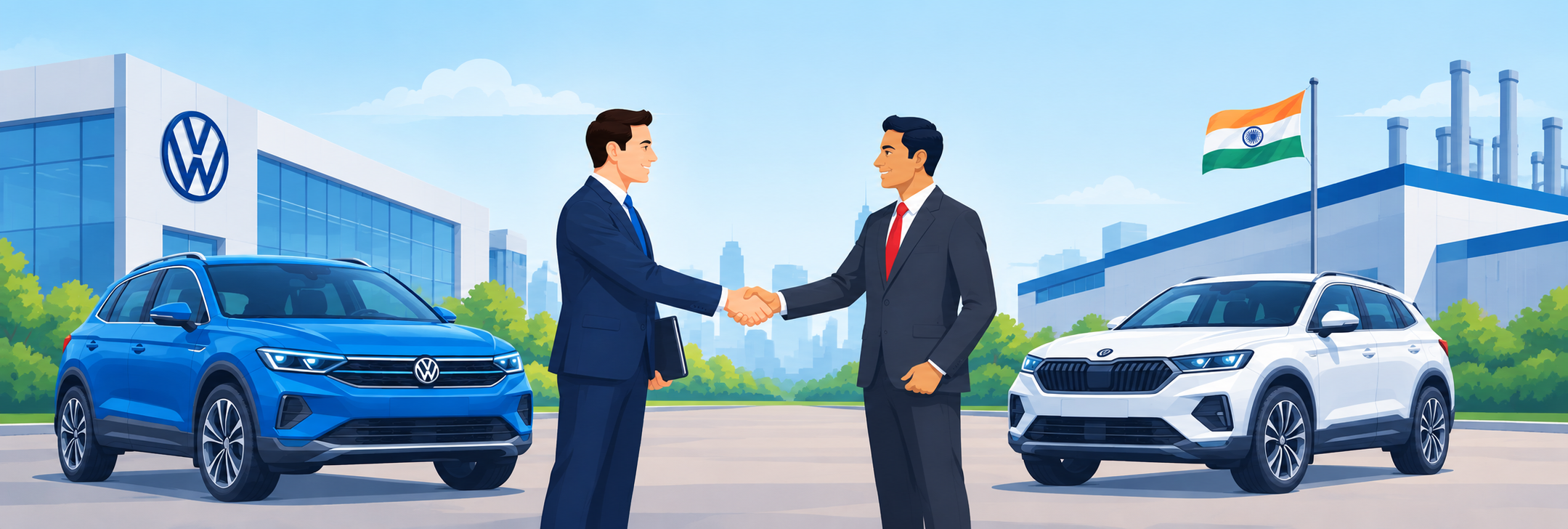
Volkswagen Group has signed a non-binding agreement with JSW Group to explore a strategic partnership covering passenger vehicle manufacturing, sales, localisation and technology. The alliance could help Volkswagen improve India’s market share and cost competitiveness while expanding JSW’s automotive presence.
Volkswagen Group has taken another step towards finding a local partner in India by signing a non-binding agreement with JSW Group to explore a potential strategic partnership. The move comes after years of attempts by the German automaker to strengthen its presence in one of the world’s fastest-growing automobile markets.
The proposed collaboration is expected to focus on passenger vehicles, including manufacturing, sales, localisation and technology development. The partnership discussions involve Volkswagen’s India operations under Skoda Auto Volkswagen India and aim to combine Volkswagen’s engineering capabilities with JSW’s manufacturing strength and domestic market understanding.
Why does Volkswagen need an Indian partner?
Volkswagen has been present in India for more than two decades but has struggled to build significant market share. Despite brands such as Volkswagen and Skoda having established operations, the group’s share in India remains around 2%. The company has been looking for a partner who can help reduce costs, improve localisation and expand its product portfolio.
Earlier attempts to collaborate with Indian companies did not progress, but JSW provides a different opportunity due to its manufacturing ecosystem and recent entry into the passenger vehicle segment through JSW MG Motor India. The proposed partnership could help Volkswagen improve supply-chain efficiency, share platforms and increase production capacity.
For JSW, the alliance provides access to Volkswagen’s global automotive technology and expertise while helping diversify its automotive business beyond its existing partnerships. The proposed venture is expected to focus on multiple powertrains, including internal combustion engines, electric vehicles, plug-in hybrids and hybrids.
Competition, China slowdown and cost pressure drive the move
Volkswagen’s India strategy comes at a challenging time for global automakers. The company is facing pressure from declining sales in China, increasing competition from Chinese manufacturers and rising costs across markets. The automaker has also been undertaking restructuring efforts globally to improve profitability.
In India, higher localisation and manufacturing scale have become critical as domestic consumers increasingly demand competitive pricing and wider product choices. A local partnership could allow Volkswagen to use existing manufacturing facilities more efficiently and improve cost competitiveness.
Investors tracking metals and materials tend to keep Jindal Group stocks on their watchlist, simply because the scale and diversity of products makes these companies worth following.
What changes if the JSW deal moves ahead?
The agreement is still at an exploratory stage, and a final binding arrangement will require further negotiations, internal approvals and regulatory clearances. Reports indicate that both companies are targeting a formal agreement by the end of 2026, with discussions around valuation and ownership structure continuing.
The potential partnership could also position India as an export hub for Volkswagen vehicles, allowing the company to use local manufacturing capabilities for international markets.