Summary:
While trading derivatives, one of the major problems that traders encounter is not about determining whether the price will go up or down, but rather what extent the movement of prices can take place. In this regard, traders have to employ non-directional options such as straddle or strangle options. Both of them can help you profit from the volatility of markets, but they vary in costs, risks, and probabilities.
Now let us consider each one more closely.
The Core Idea Behind Both Strategies
Both straddles and strangles are built on one basic concept:
It doesn’t matter if the market goes up or down – what matters is how far it moves.
- If you think the market will be volatile, then you look at buying strategies.
- If you think it will be calm, then you look at selling strategies.
So, which structure would you use more?
What is a Straddle?
A Straddle involves taking positions in both a Call and a Put option at the same strike price (ATM) and same expiry.
Long Straddle
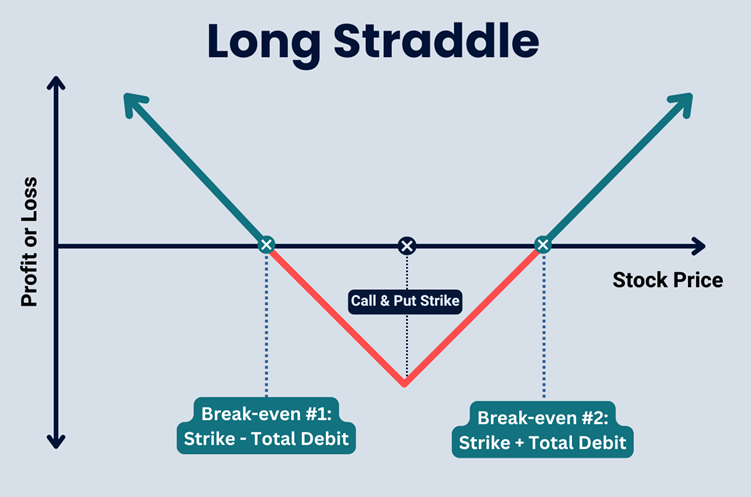
- Buy ATM Call + Buy ATM Put
- Suitable when expecting a sharp move in either direction
- Cost: High (ATM options are expensive)
- Risk: Limited to premium paid
- Reward: Unlimited if the move is strong
Short Straddle
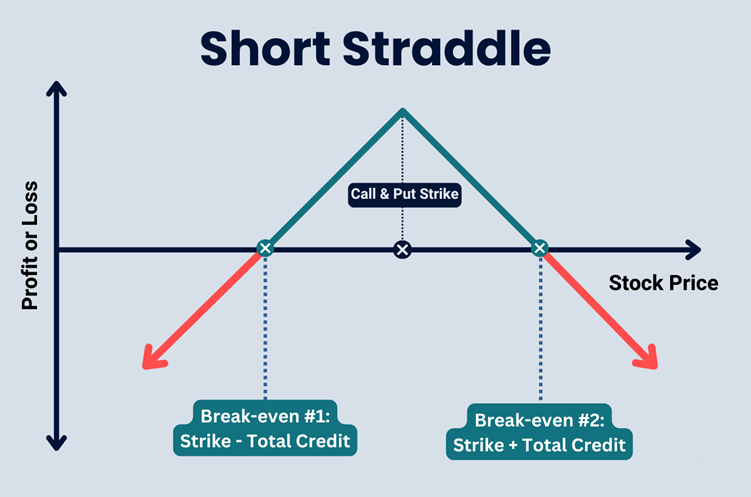
- Sell ATM Call + Sell ATM Put
- Suitable when expecting range-bound movement
- Profit: Limited to premium received
- Risk: Unlimited if the market breaks out
Key Insight:
A Straddle gives you closer breakeven points, meaning the market doesn’t need to move too much to start generating profits (in long case). However, this comes at a higher upfront cost.
What is a Strangle?
A Strangle is a variation where you use OTM (Out-of-the-Money) options instead of ATM.
Long Strangle
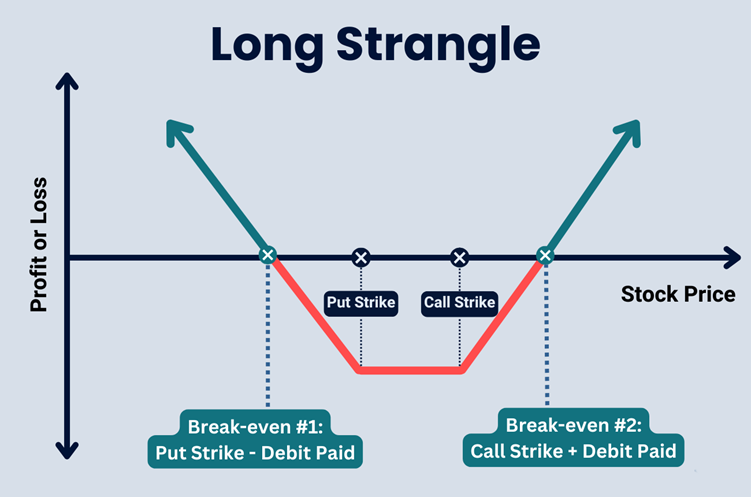
- Buy OTM Call + Buy OTM Put
- Suitable when expecting big movement but want lower cost
- Cost: Lower than Straddle
- Risk: Limited
- Reward: High, but requires a larger move
Short Strangle
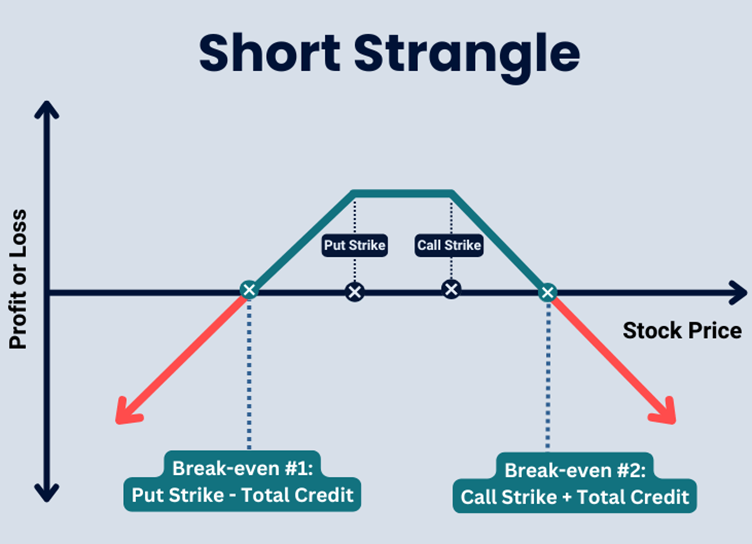
- Sell OTM Call + Sell OTM Put
- Suitable when expecting market to stay within a broader range
- Profit: Limited
- Risk: Unlimited
- Advantage: Higher probability of success
Key Insight:
Strangle reduces cost (for buyers) and increases probability (for sellers), but requires better patience and strike selection.
Straddle vs Strangle: Practical Comparison
1. Cost vs Breakeven
- Straddle: Higher cost, closer breakeven
- Strangle: Lower cost, wider breakeven
Implication:
- Straddle needs moderate movement
- Strangle needs strong movement
2. Probability of Success
- Short Straddle: Lower probability due to tighter range
- Short Strangle: Higher probability due to wider range
This is why many traders prefer Short Strangle for consistent premium collection.
3. Risk-Reward Structure
- Buying (Long Straddle/Strangle)
- Risk: Limited
- Reward: Potentially large
- Selling (Short Straddle/Strangle)
- Risk: Unlimited
- Reward: Limited
This makes buying safer from a risk perspective, while selling offers higher probability but demands strict discipline.
4. Market Suitability
| Market View | Strategy |
| Expect strong move, no direction clarity | Long Straddle |
| Expect strong move, but want lower cost | Long Strangle |
| Expect tight range, low volatility | Short Straddle |
| Expect range, but want safety buffer | Short Strangle |
How to Choose the Right Strategy?
Think in terms of market behavior, not just strategy names:
- If there’s an event-driven setup (results, policy decisions, global cues):
→ Long Straddle works better due to faster response - If you expect movement but want cheaper entry:
→ Long Strangle is more efficient - If the market is clearly consolidating with low volatility:
→ Short Straddle can generate steady premium - If the market is range-bound but uncertain:
→ Short Strangle provides better cushion and probability
Pro Tips (What Actually Matters)
- Straddle is aggressive, Strangle is slightly conservative
- Straddle gives quicker breakeven reach, Strangle needs bigger moves
- Short Strangle generally offers better probability than Short Straddle
- Time decay (Theta) strongly benefits option sellers
- Always track breakeven zones, not just strike prices
Conclusion
There is no universal winner between Straddle and Strangle—it depends entirely on your market view, cost sensitivity, and risk appetite.
If you prefer precision and faster payoff, Straddle fits better.
If you prefer flexibility, lower cost, and higher probability, Strangle is more suitable.
Ultimately, successful options trading is not about using more strategies—it’s about using the right strategy at the right time.