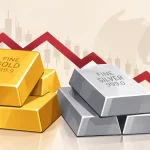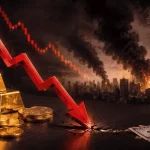
Gold and silver prices have witnessed a sharp decline even as the US–Iran war intensifies and global markets remain volatile. Traditionally, such geopolitical tensions boost safe-haven demand, but this time, both metals are moving in the opposite direction. Gold has fallen to $4,691.70, down around 6% this week, while silver dropped to $70.68, losing 8.5%, marking nearly one-month lows. The fall reflects a shift in market dynamics where macroeconomic pressures are outweighing geopolitical risks.
Gold and Silver Hit One-Month Lows Amid Broad Commodities Sell-Off
The weakness is not limited to gold and silver. Platinum declined to $1,938.20, down 5.76%, while copper slipped to $5.44, losing 2.78%. This indicates a broader pullback across commodities. Gold has also recorded six consecutive sessions of losses, its longest losing streak since 2024, highlighting sustained selling pressure and changing investor sentiment.
Why Gold Is Not Rising During War: Shift in Safe-Haven Demand
Despite the US–Iran conflict, investors are not moving capital into gold and silver as expected. Instead, rising oil prices have become the dominant theme. Brent crude has surged over 40%, crossing $100, absorbing much of the safe-haven demand. This unusual trend has created a negative correlation where rising oil prices are dragging gold and silver lower, making energy markets the preferred hedge in the current environment.
Strong US Dollar and Interest Rates Putting Pressure on Bullion
One of the biggest reasons behind falling gold and silver prices is the strengthening US dollar. A stronger dollar makes metals more expensive for global investors, reducing demand. At the same time, expectations of Federal Reserve rate cuts are fading due to persistent inflation.
Higher interest rates increase bond yields, making yield-bearing assets more attractive compared to gold and silver, which do not offer returns. As a result, investors are shifting funds away from bullion into bonds and other financial assets.
Rising Inflation Is Hurting Gold Instead of Supporting It
Rising oil prices are fueling global inflation concerns. While gold is typically seen as an inflation hedge, the current scenario is different. Higher inflation is forcing central banks to keep interest rates elevated for longer, which negatively impacts gold and silver prices.
Earlier, gold had surged above $5,600, and silver crossed $120, supported by expectations of rate cuts. However, as those expectations reversed, metals have come under significant pressure.
Gold Prices in India Fall Sharply on March 19, 2026
Gold prices in India declined slightly on March 20, 2026, reflecting continued weakness in global bullion markets and a strong U.S. dollar. Current price levels are:
- 24K Gold: ₹15,027 per gram
- 22K Gold: ₹13,774 per gram
- 18K Gold: ₹11,270 per gram
How Much Have Gold and Silver Prices Fallen Recently
Gold prices have declined around 1.4% in recent sessions and nearly 9% from recent highs. Silver has seen a sharper fall due to its industrial exposure, dropping around 4% in recent sessions and even more in futures markets, where declines have reached up to 18%.
This shows that both financial and industrial demand factors are contributing to the decline.
Key Factors Behind Gold and Silver Price Crash
The fall in gold and silver prices is driven by a combination of factors. A stronger US dollar has reduced global demand, while rising oil prices have increased inflation concerns. Higher interest rates have made non-yielding assets like gold less attractive. Capital is also shifting towards bonds and equities, and overall investor sentiment remains weak in the short term.
Will Gold and Silver Prices Recover or Fall Further
The outlook for gold and silver remains uncertain. If inflation stays high and interest rates remain elevated, prices may continue to face pressure and trade in a volatile range.
However, there is still potential for recovery. If the Federal Reserve signals rate cuts or if the US dollar weakens, gold and silver could rebound quickly. Additionally, prolonged geopolitical tensions could revive safe-haven demand over time.
What Should Investors Do Amid Falling Gold Prices
Investors should avoid panic selling during short-term volatility and focus on long-term strategies. Tracking inflation trends and central bank policies is crucial. Diversification across asset classes can help manage risk, while staggered buying may be more effective than lump-sum investments.
Although gold and silver are under pressure now, they remain important components of a balanced portfolio, especially during periods of prolonged uncertainty.
Conclusion
The current fall in gold and silver prices highlights a rare market phase where macroeconomic factors are dominating geopolitical influences. Strong dollar momentum, rising oil prices, and fading rate cut expectations are outweighing traditional safe-haven demand.
Even amid war and market turbulence, inflation and interest rates have taken center stage, reshaping how investors respond to global uncertainty.