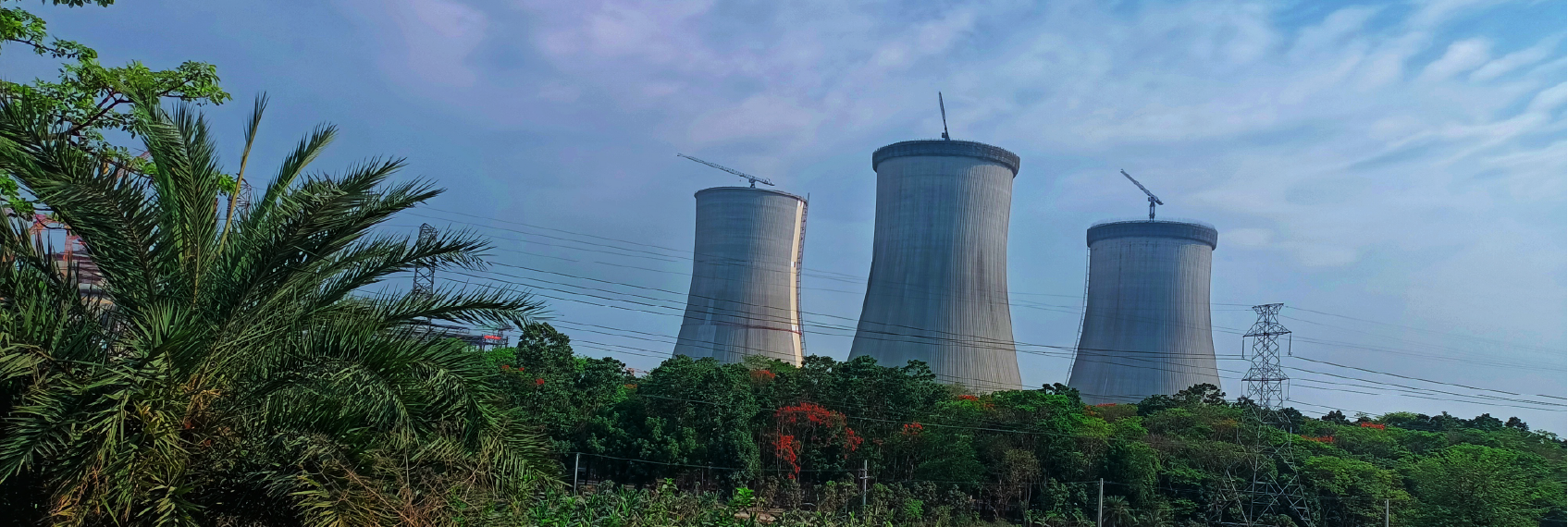
As of March 2026, the nuclear energy sector of India is shifting from being a government-controlled monopoly to being a major opportunity for Indian industries. The SHANTI Act 2025, which was introduced during the latter part of 2025, coupled with the nuclear energy mission, has set a target of 100 GW of capacity by 2047, intending to achieve 22.4 GW by 2031-32.
The policy catalyst
The legislative landscape has shifted significantly in recent months. The SHANTI Act 2025 replaced the outdated Atomic Energy Act (1962). It allows private companies to build, own, operate, and transfer nuclear facilities, possibly in the form of a joint venture with a maximum of 49% equity from a private or foreign company. Significantly, it has fixed the liability of the operators and terminated the ‘Right of Recourse.’ This has made it safer for private companies to provide the necessary components without incurring a huge financial burden in case of a mishap. The government has exempted customs duty on nuclear imports until 2035, specifically on fuel cartridges and reactor control rods, to minimise costs.
Key players in the supply chain
The supply chain consists of three tiers: the ‘Generators’ (who own the plants), the ‘EPC Giants’ (who build them), and the ‘Component Specialists' (who manufacture the precise parts).
| Tier | Key Listed Players | Strategic Role in 2026 |
| Generators | NTPC Limited, Nuclear Power Corporation of India (NPCIL) Limited (Not Listed), Tata Power Limited | NTPC's joint venture (ASHVINI) is developing the 2,800 MW Mahi Banswara plant. Tata Power is looking for sites for Small Modular Reactors (SMRs). |
| EPC & Heavy Manufacturing | Larsen & Toubro (L&T) Limited | The leader in the sector. L&T has supplied components to all 24 existing reactors and is now the main partner for Bharat Small Reactors. |
| Components | Anup Engineering Limited, Engineers India Limited (EIL) | Experts in heat exchangers and pressure vessels. EIL also provides consultancy for large civil infrastructure projects. |
| Ancillary | Kirloskar Brothers Limited, Walchandnagar Industries Limited | Suppliers of high-precision pumps and cooling systems. Kirloskar recently won a ₹2.14 billion pump contract for nuclear-related projects. |
The emerging SMR opportunity
Small Modular Reactors (SMRs) are central to the strategy for 2026. Unlike traditional Gigawatt plants that take over a decade to build, SMRs (20-300 MW) can be manufactured in factories and deployed as captive power plants for energy-intensive industries:
- AI data centres: These need stable green baseload power around the clock.
- Green hydrogen: Nuclear heat is being considered to support high-temperature electrolysis.
- Industrial clusters: Companies like Adani Power and JSW Energy are reportedly exploring 16 sites to install SMRs for their own manufacturing centres.
Fuel security: the uranium pacts
India is addressing its weakness in uranium supply. India has signed a significant CAD 2.6 billion agreement with Canada's Cameco to receive 22 million pounds of uranium through 2035. Similar talks are ongoing with Kazatomprom (Kazakhstan) to ensure that the 24 operating reactors can run at full capacity.
Investment strategy: the 40-30-30 approach
For a 5 to 10-year horizon, a diversified Nuclear Basket could look something like this:
- 40% core giants: L&T, NTPC: Greater stability and predictable returns.
- 30% growth enablers: Anup Engineering, Engineers India: Higher margins possible as the number of "under construction" increases from 7 to 17.
- 30% producers & utilities: Tata Power, Adani Power: High-risk, high-reward bets as they become the first private nuclear operators.
Conclusion
Even with reforms, the nuclear sector remains capital-intensive with long development times. Regulatory delays or changes in uranium prices due to geopolitical factors are the main risks.