Tension in the Strait of Hormuz risks India’s imports of crude oil and LNG
Following the US and Israel’s attacks on Iran and retaliatory strikes against Israeli and US military installations in the Gulf, we have seen a significant spike in oil prices. On day three of the conflict, the Pentagon confirmed the deaths of three US service members in Kuwait; President Trump pledged to continue US operations until objectives were accomplished.
Reportedly, strikes from the US military killed Iranian Supreme Leader Ayatollah Ali Khamenei and up to 40 top Iranian officials. In retaliation, Iran responded with missile and drone strikes against US military bases in the Gulf region and Israel; this has led to Israel issuing evacuation orders for dozens of villages in southern Lebanon, where tensions between Hezbollah and Israel have escalated.
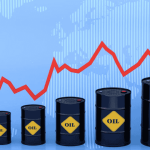
The military actions that have occurred in the past three days have sent shock waves throughout the global energy supply chain and led to an increase in oil prices. West Texas Intermediate (WTI) Crude oil futures for April 2026 traded recently at $72.02 per barrel (up 7.46%) due to concerns of supply disruption.
Amid the conflict, OPEC+ agreed to a modest oil output boost of 2,06,000 barrels per day for April on Sunday.
Implications of Higher Crude Oil Prices on India
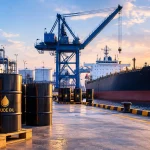
For India, the current conflict poses a major economic challenge. The Strait of Hormuz is vital for India's energy imports, with ~54 to 60% of liquid natural gas (LNG) and ~50% of crude oil coming through it. It lies between Iran to the north and Oman (Musandam Peninsula) and the UAE to the south, measuring about 21-30 miles wide at its narrowest. This positioning makes it the only sea passage from the oil-rich Persian Gulf to the open ocean. Around 20-21% of global oil (roughly 20 million barrels daily) and 30% of LNG transits the strait, serving exporters like Saudi Arabia, Qatar, the UAE, Iraq, and Iran.
India would likely be forced to draw from its Strategic Petroleum Reserves (SPR) in the event of a sustained disruption or blockage of maritime traffic through the Strait of Hormuz. At present, India has around 30 million barrels of strategic reserves; this is roughly 6 to 10 days' worth of national oil consumption in the event of a major disruption in supply. Coupled with commercial stockpiles, India has approximately 60 to 74 days of strategic reserve coverage.
India is the world’s third-largest oil importer. It is estimated that a $10 per barrel increase in the global price of oil would increase India's annual import bill by approximately $14 billion. It’s also expected that this would widen the trade deficit and devalue the Indian Rupee relative to today's USD.
Conclusion
India might think about buying crude oil that is currently floating around in the Arabian Sea without a buyer, including potential supplies from Russia, to stabilise its supply amid market uncertainty. Shipments from the Middle East normally take about five days to reach India; however, Russian crude could take two to four weeks to reach the country, so advance planning would be needed. In addition, India has the opportunity to use its strategic petroleum reserves if a supply disruption were to occur. The strategic petroleum reserves would allow India to have enough crude for approximately one week of consumption.