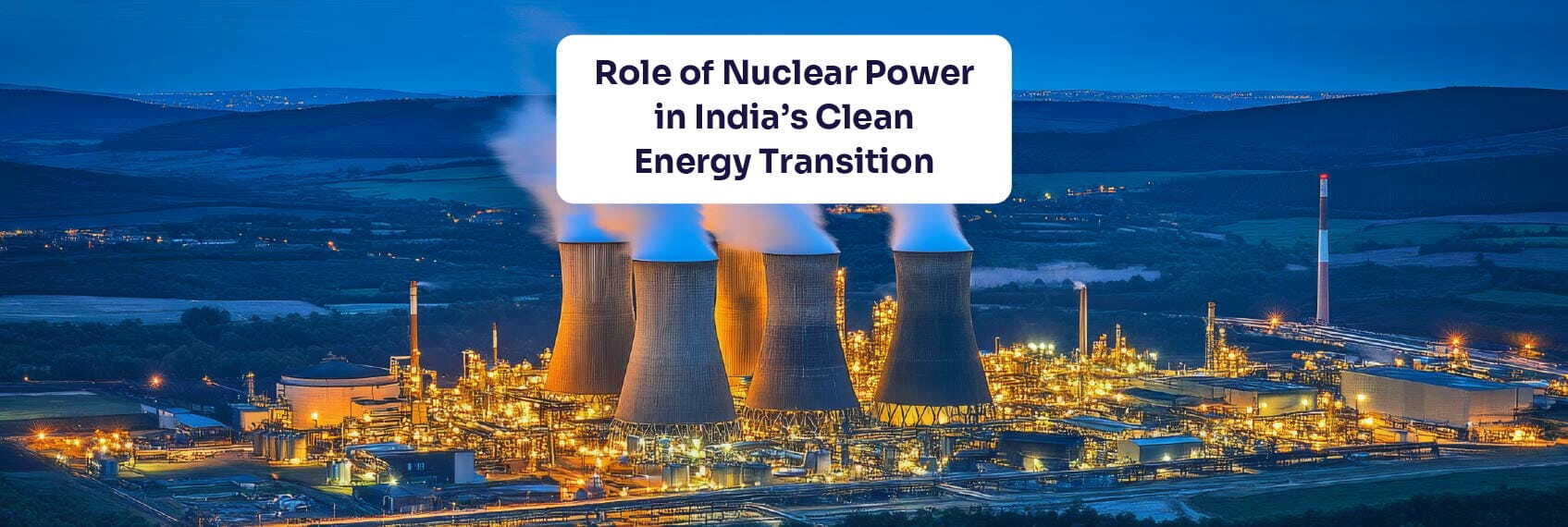
India is approaching a significant point in its development of renewable sources of energy and its strategy to transition to a lower carbon economy. The increase in urban areas and levels of income is creating a demand for electricity which is unprecedented in terms of growth rates. Additionally, India has stated its intention to be carbon neutral by 2070 making it necessary to find a balance between these two competing priorities (high growth and reduced emissions). To achieve this balance, India will need a range of low-carbon energy sources that allow for both the ability to deliver energy and reliability.
India’s clean energy transition and the need for baseload power
India is targeting the establishment of 500 Gigawatts worth of non-fossil fuel based electricity generation capacity by 2030. This goal is part of India's wider goals for a clean energy transition, where India anticipates, that much of the electricity generated through renewables such as solar and wind will make up most of the contracted generation capacity from renewables after 2020. Yet in spite of this, coal will be and will continue to be, the dominant source of electricity for India including in the year 2025, having contributed to over 70% of India's generation capacity.
The dominant role of coal in India presents a serious challenge for implementation of decarbonising and nuclear energy strategies for India. Coal-based generators provide reliable and dispatchable generators for electricity; these characteristics are not replicated by intermittent sources of renewable generation without large quantities of energy storage. Nuclear generation is able to provide a continuous supply of electricity that is necessary to support a reliable grid system while also supporting the ability of industrial operations and urban infrastructure.
As electricity demand is forecasted to be more than double by the year 2040, if there are no firm low-carbon sources of generation, it will undermine the progress of the global community to achieve their climate commitments. Nuclear generation will not replace renewable energy but rather support the integration of renewable energy via providing a firm, low-carbon supply of electricity, and reinforcing the overall system.
Understanding nuclear power in simple terms
Electricity generated using nuclear fission is produced by splitting uranium atoms in a controlled environment to create power using heat from the resulting fission reaction. The heat created by fission turns water into steam and can be collected into large tanks known as turbine generators; these turbine generators then convert the steam into electricity. Because there are no carbon dioxide (CO2) emissions associated with nuclear energy production, it is considered to be a source of "clean energy".
Nuclear power plants in India have the potential to produce very large amounts of energy while having an average fuel cycle of 3-5 years. This means that when there is an outage of any type of energy resource (e.g., during inclement weather), nuclear power plants will continue to contribute energy to the grid, providing "baseload" power. Lifecycle greenhouse gas emissions from nuclear energy are on par with the lifecycle emissions of wind energy and are much lower than the lifecycle emissions from both natural gas and coal.
Current status of nuclear power in India
As of early 2026, India's 25 nuclear reactors have approximately 8,180 MW of total capacity. Currently they generate about 3% of all electricity; both statistic demonstrate low utilization and potential for growth.
In FY 2024-25, India's nuclear plants produced an all-time high of nearly 50 BNU of electric energy. This achievement demonstrates improvement in both operating efficiency as well as capacity utilization. In addition, ten more units (with a combined capacity of around 8 GWs) are being constructed across Gujarat, Rajasthan and Tamil Nadu.
The Indo government has set the goal of raising nuclear capacity to 22.48 GW by FY 2032 (ending March 31 2032). Further, there is continuing research and development on Bharat Small Reactors, which are being funded by a ₹20,000 crore government allocation; these demonstrate the shift towards modular and scalable nuclear options.
Strategic importance of nuclear power for India
Nuclear power provides clean energy reducing emissions from electricity generation as well as energy security. Nuclear energy is considered a major part of energy policy for a country having a population of over 1.4 billion people. Nuclear energy reduces the potential dependency on fossil fuel imports into India, hence providing a degree of insulation from the volatility of international energy markets.
Nuclear power stations also have much higher capacity factors than wind or solar; the combination of this significant capacity factor and reliable electricity supply is critical to meeting the demands created by electrification of various sectors like manufacturing, transportation and digital infrastructure.
When viewed from a policy perspective, nuclear energy supports a long-term decarbonisation of the electric grid by directly displacing coal-based generation without the need for large-scale land acquisitions. In many cases, especially urban areas where land is at a premium, this makes nuclear competitive with other energy forms.
Nuclear energy and renewable energy in India
Nuclear and renewable energies are seen as oppositional, though both can be used together effectively. Nuclear provides a dependable, continuous supply while renewables like solar or wind generate low-cost electricity during times of maximum potential output. The combination of nuclear and renewable generation creates a more stable electric grid with less need for fossil-fuel based backup generation.
While considerable research is being done to develop the technology for large-scale battery storage, this technology will be prohibitively expensive for some time. In addition, many studies indicate that long-term costs of using nuclear plants to supply base-load electricity are equivalent with respect to both investment requirement and capacity factor compared to using renewable generation to supply base-load electricity.
Conclusion
Nuclear power occupies a distinctive and indispensable position in India’s clean energy transition. While renewable energy will remain the cornerstone of capacity expansion, nuclear energy in India provides the stability and scale required to support economic growth and climate commitments simultaneously.
By addressing financial, regulatory, and social challenges with balanced policy measures, India can unlock the full potential of nuclear power. As the country moves towards its net-zero ambition, nuclear energy is poised to play a central role in shaping a resilient, low-carbon energy future.