
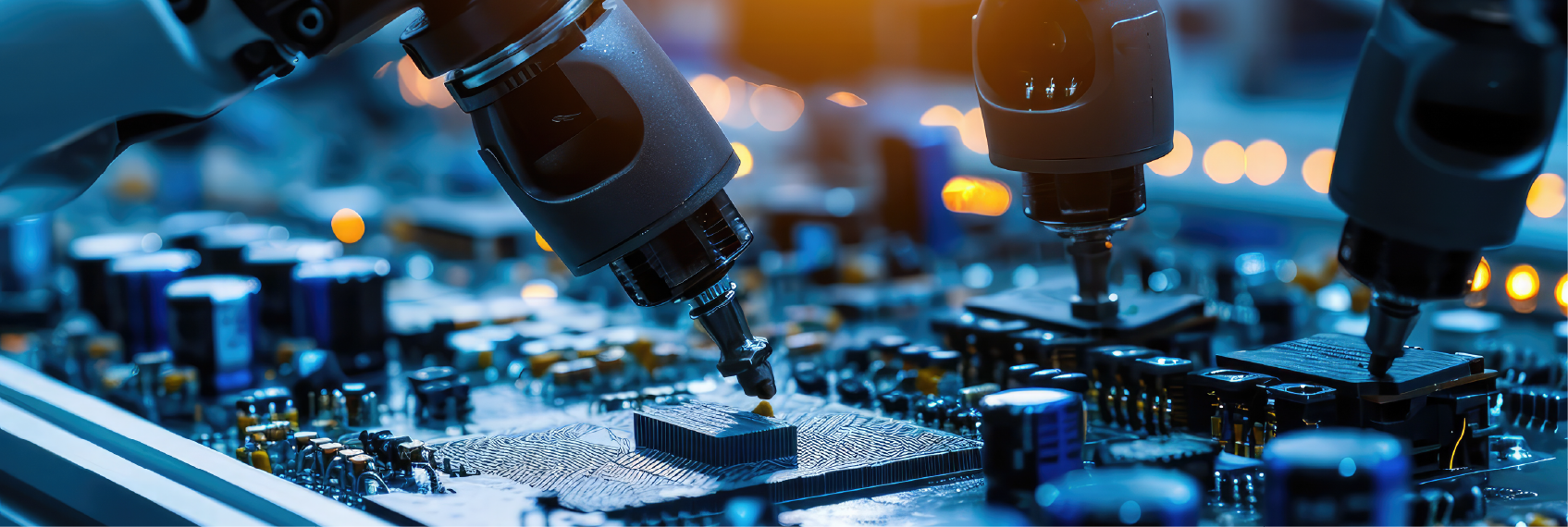
The global semiconductor ecosystem is in the midst of a structural shift as countries aim to decentralise supply chains and build domestic capacity. India, which has been a net importer of semiconductors, is now emerging as a producer of semiconductors.
Geopolitical tensions, supply chain disruptions during the pandemic, and booming demand from next-gen technologies have converged to create a strong investment narrative. The Union Budget 2026, with the India Semiconductor Mission 2.0 (ISM 2.0) announcement, has only reinforced the momentum and helped drive private capital into the sector. In addition to building capacity, the narrative is also driven by India’s strategic goal of deeper integration into the global electronics value chain and capturing higher domestic value addition.
Semiconductor stocks are those of companies covering the semiconductor value chain from design, fabrication, assembly and test, to packaging and other services. These stocks are a part of an industry that is characterised by capital intensity, technical complexity and cyclicality. The industry is marked by long development lead times and high research and development costs.
In India, semiconductor stocks include electronics manufacturing firms, design houses providing application specific integrated circuit solutions and giant industrial groups made through joint ventures and strategic investments. For long-term investors, such semiconductor stocks offer a way to benefit from long-term structural drivers such as adoption of artificial intelligence (AI), penetration of electric vehicles, roll-out of 5G infrastructure and the larger digitalisation plan that India is pursuing.
India’s semiconductor ecosystem is in an embryonic phase compared to places like Taiwan, South Korea and the United States of America. Today, India imports semiconductors for almost all of its needs. While there is an existing need for the imported components, the domestic electronics component market in India also presents a significant opportunity. The domestic semiconductor market was valued at $38 billion in 2023 and is projected to reach $64 billion by 2026 and $100-$110 billion by 2030, indicating a compound annual growth rate of 13%. Electronics manufacturing is projected to grow from $101 billion in 2022 to $300 billion by 2026.
Recognizing capabilities in the country, the India Semiconductor Mission was launched in 2021 with an initial financial allocation of ₹76,000 crores. The India Semiconductor Mission 2.0 was announced on February 6, 2026, in conjunction with the expanded Electronics Components Manufacturing scheme. Ten semiconductor projects in six states have been approved to date. These projects include a mix of fabrication plants, assembly and testing facilities and compound semiconductors (silicon carbide).
The primary investment catalyst is supply-chain resilience. Global semiconductor manufacturing is still highly concentrated, and Taiwan has the lion's share of capacity. India's political environment, geographical location, and skilled engineering workforce make it a credible alternative for global manufacturers looking to diversify. Some multinational equipment suppliers have already started operations in India, indicating increasing confidence in the ecosystem.
There are other tailwinds as well. Domestic demand is expected to contribute around 10% of global semiconductor consumption by 2030, driven by EVs, industrial automation, AI applications, telecom infrastructure, and consumer electronics.
There are also robust incentives from the government. Under ISM 2.0, semiconductor projects can get up to 50% fiscal incentive on eligible capital expenditure, production-linked incentive (PLI) schemes, and state subsidies. Together, these incentives can significantly reduce the effective cost of projects.
India’s semiconductor manufacturing space requires long-term patience supported by strong policy intent, growing domestic demand and global supply chain reorientation. While there is substantial upside potential in the 2026 to 2035 period, it carries a higher risk of execution, technology and capital intensity. Thus, investors should look at a longer-term time horizon, thorough due diligence, and diversified exposure across the semiconductor value chain. This is a high-conviction, high-patience, rather than high-return, investment avenue.

Top 7 High Dividend Yield and Low Debt Companies in India: Coal India, Power Grid Infra
3 min Read Feb 9, 2026
What Is Anthropic and Why Is Everyone Talking About It Now?
3 min Read Feb 5, 2026
𝐀𝐫𝐞 𝐃𝐅𝐈𝐬 𝐒𝐞𝐞𝐢𝐧𝐠 𝐒𝐨𝐦𝐞𝐭𝐡𝐢𝐧𝐠 𝐭𝐡𝐞 𝐌𝐚𝐫𝐤𝐞𝐭 𝐈𝐬𝐧’𝐭?
3 min Read Feb 4, 2026
𝐕𝐞𝐧𝐭𝐮𝐫𝐚 𝐢𝐧𝐭𝐫𝐨𝐝𝐮𝐜𝐞𝐬 𝐎𝐩𝐭𝐢𝐨𝐧𝐬 𝐒𝐭𝐫𝐚𝐭𝐞𝐠𝐲 𝐁𝐮𝐢𝐥𝐝𝐞𝐫
3 min Read Feb 4, 2026
𝗦𝗼𝗺𝗲 𝗛𝗮𝗿𝗱 𝗧𝗿𝘂𝘁𝗵𝘀 𝗔𝗯𝗼𝘂𝘁 𝗔𝗜 & 𝗜𝗻𝗱𝗶𝗮’𝘀 𝗜𝗧 𝗙𝘂𝘁𝘂𝗿𝗲
3 min Read Feb 4, 2026
For android only