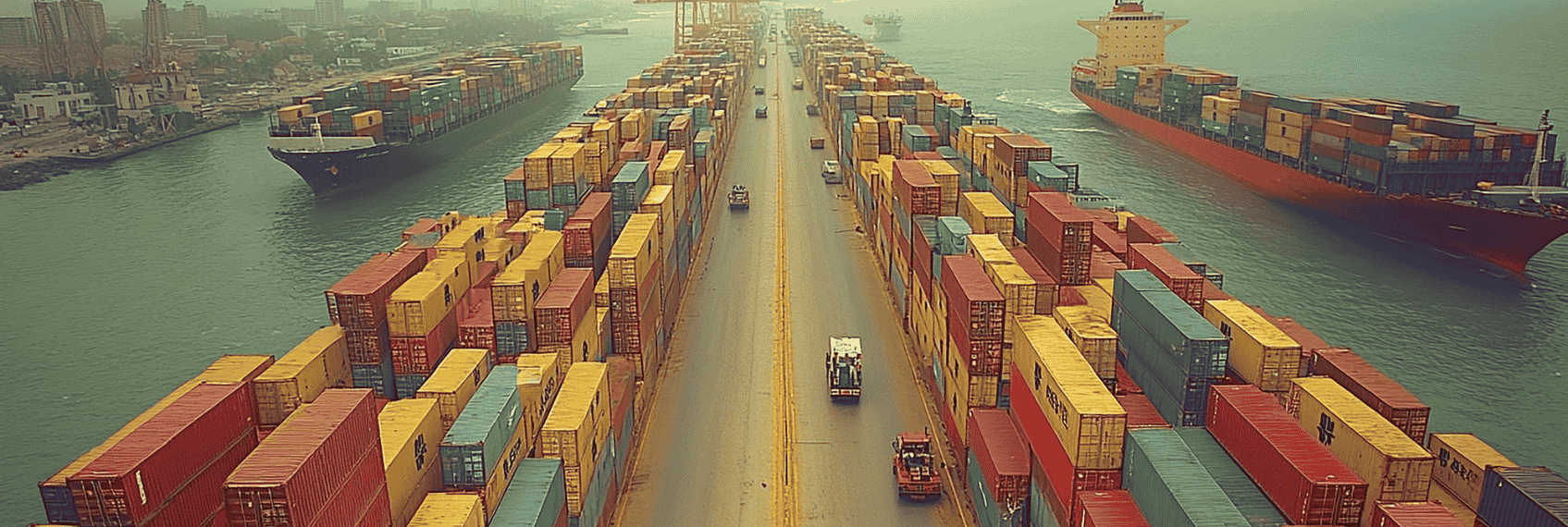
The administration of Donald Trump has launched a fresh investigation into alleged “unfair trade practices” by 16 major global economies, including India, China, the European Union, Japan, South Korea and Mexico. The probe, initiated under Section 301 of the Trade Act of 1974, could potentially pave the way for new tariffs on imports from these countries as early as this summer.
The move comes barely a month after the US and India unveiled a framework for an interim bilateral trade agreement. Although the investigation does not immediately trigger tariffs, it creates the legal pathway for Washington to impose duties depending on the findings.
The probe comes after the US Supreme Court struck down a key part of the Trump administration’s global tariff programme last month, ruling that the government had exceeded its authority by imposing sweeping tariffs under emergency economic powers.
Following the ruling on February 20, the US administration imposed a temporary 10% tariff on imports from all countries for 150 days under Section 122 of the Trade Act of 1974. This temporary tariff regime will expire in July, and the new Section 301 investigation is expected to provide a stronger legal foundation for future trade actions.
According to Jamieson Greer, the investigation will focus on whether certain economies exhibit structural excess manufacturing capacity that distorts global trade.
The Section 301 investigation will assess whether foreign trade practices are unreasonable, discriminatory, or harmful to US commerce. Washington will examine indicators such as persistent trade surpluses, government subsidies, activities of state-owned enterprises, subsidised lending, suppressed domestic wages, weak labour or environmental standards and currency practices.
If these practices are found to damage US industries, the administration could impose retaliatory measures such as tariffs, import restrictions, market access barriers or other trade actions.
Section 301 is widely considered one of the strongest trade enforcement tools available to the US government. During Trump’s first presidency, the mechanism was used to justify tariffs of about 25% on hundreds of billions of dollars of Chinese imports, triggering a prolonged US-China trade war.
The investigation targets 16 major trading partners of the United States. Along with India, China, the European Union, Japan, South Korea and Mexico, the list also includes Taiwan, Vietnam, Thailand, Malaysia, Cambodia, Singapore, Indonesia, Bangladesh, Switzerland and Norway.
Notably, Canada, the second-largest US trading partner, was not included in the probe.
A key focus of the investigation is excess global manufacturing capacity. US officials argue that some countries support large-scale manufacturing through heavy subsidies, cheap financing and state-backed industrial policies.
This can result in production exceeding global demand and lead to cheaper exports flooding international markets. While such concerns have historically focused on China, US officials say the issue has spread to several emerging manufacturing hubs.
The US Trade Representative cited China’s automotive sector as an example, noting that electric vehicle production capacity significantly exceeds domestic demand. The country’s largest EV manufacturer, BYD, has been expanding its overseas manufacturing footprint with factories in Uzbekistan, Thailand, Brazil, Hungary and Turkey while continuing to expand capacity in Europe, where automotive plants are operating at about 55% utilisation.
The US also cited large trade surpluses in Germany and Ireland as evidence of excess capacity within the European Union. Singapore was cited for excess global semiconductor capacity despite running a trade deficit with the US, while Norway’s strong fuels and seafood exports were also flagged.
India’s inclusion is notable because it comes shortly after a trade framework was announced between Trump and Narendra Modi aimed at advancing a broader India-US bilateral trade agreement.
Under the February understanding, India agreed to reduce or eliminate tariffs on several US industrial and agricultural products. The United States indicated it would apply an 18% reciprocal tariff structure on Indian goods, reduced from an earlier proposed rate of 50%.
Both countries also pledged to remove non-tariff barriers and expand market access. Trump further announced that India would purchase $500 billion worth of US goods over the next five years.
Despite these developments, US officials clarified that ongoing trade negotiations will not shield countries from Section 301 investigations.
The United States remains India’s largest export market, and several sectors could face risks if tariffs are imposed. According to data tabled in Parliament by India’s Ministry of Commerce, exports to the US between April and January of FY26 included electronics, including smartphones, worth $20.86 billion.
Textiles and apparel exports stood at $7.88 billion, pharmaceuticals at $7.25 billion and engineering goods at $5.98 billion. Metals and equipment exports totalled $4.83 billion, gems and jewellery accounted for $4.19 billion, and auto components stood at $2.03 billion. Solar equipment exports were valued at $0.96 billion.
Many of these sectors, particularly electronics, metals, engineering goods and solar equipment, fall within manufacturing industries that could be scrutinised under the excess-capacity investigation.
The immediate economic impact remains uncertain. However, the investigation introduces a new layer of trade risk for India’s exporters.
India currently exports more than $100 billion worth of goods to the United States annually. If tariffs were imposed on just 10% of these exports, the trade exposure could exceed $10 billion.
Even relatively modest tariffs in the range of 10-15% could reduce the price competitiveness of Indian products in the US market.
Alongside the excess-capacity probe, the US administration is also launching another Section 301 investigation into imports produced using forced labour, covering more than 60 countries.
The United States already bans goods produced using forced labour under the Tariff Act of 1930, with additional restrictions introduced through the Uyghur Forced Labour Prevention Act.
The new probe aims to expand enforcement across a wider range of countries and supply chains.
The investigation will proceed through a formal process in the coming months. Public comments will be accepted until April 15, followed by a public hearing expected around May 5. The final findings and potential remedies are likely to be announced before July, when the current 150-day temporary tariff regime expires.
If the investigation concludes that unfair trade practices exist, the US administration could impose new tariffs or other trade restrictions later this year.
The probe signals that Washington is continuing to rely on tariffs as a central tool in its trade strategy, even after the courts curtailed earlier tariff measures.
For India, the investigation introduces uncertainty but does not necessarily derail ongoing trade negotiations with the United States. Instead, it reflects the increasingly complex nature of modern trade diplomacy, where negotiations and disputes often move forward simultaneously as countries attempt to balance economic cooperation with competitive pressures.
Aarti Industries Limited Secures $150 Million Agrochemical Supply Contract
4 min Read Mar 12, 2026
IRCTC LPG Shortage: Stove Kraft, TTK Prestige Shares Jump on Induction Demand
4 min Read Mar 12, 2026
Jal Jeevan Mission 2.0 Boosts Shakti Pumps, SPML Infra, Indian Hume Pipe Shares
4 min Read Mar 11, 2026
Waaree Renewable Technologies Share Price Surges 7% on 300 MW Solar EPC Order
4 min Read Mar 11, 2026
InterGlobe Aviation Share Price Jumps Nearly 3% After CEO Pieter Elbers’ Sudden Exit
4 min Read Mar 11, 2026
For android only